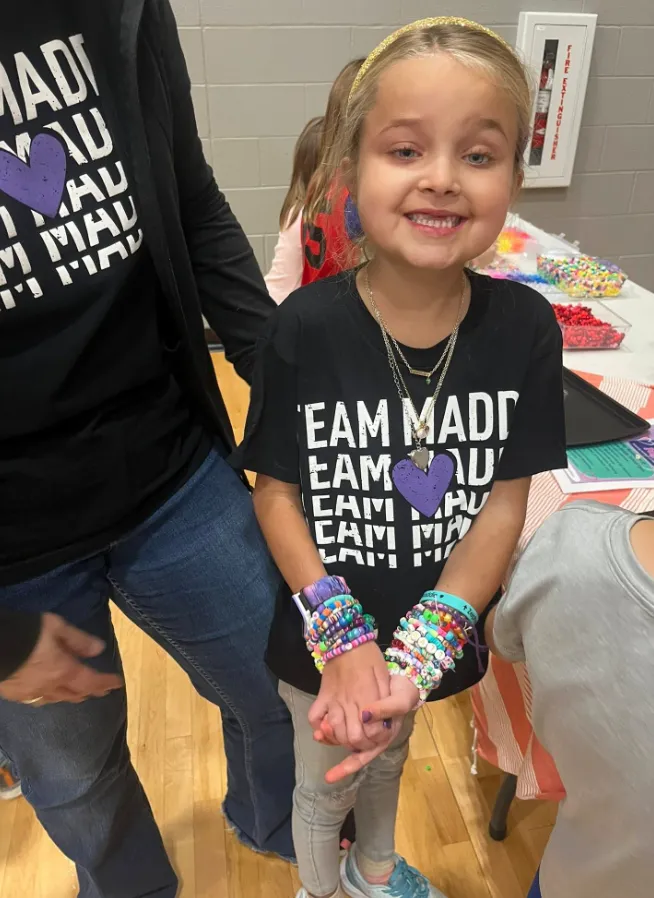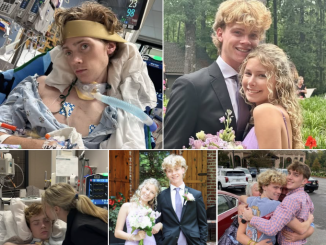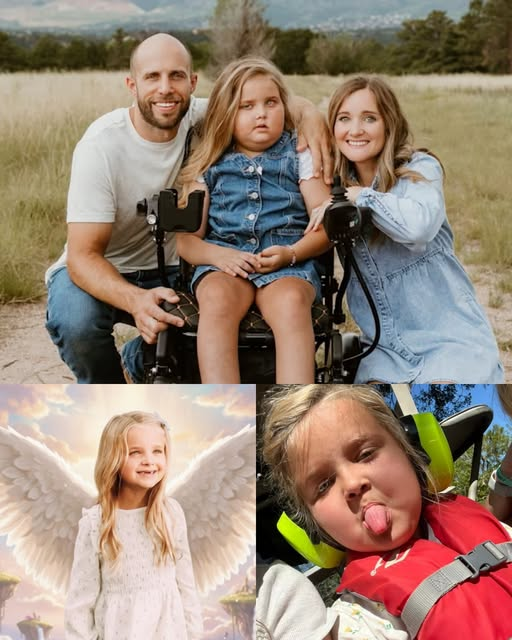
There are children whose presence lights up a room.
And then there are children whose presence lights up an entire world.
Eight-year-old Maddie was the second kind.
She was bright.
She was bold.
She was impossibly funny.
She was the kind of child whose laughter didn’t just echo — it radiated, bouncing off every heart within reach and settling in a place people never forget.
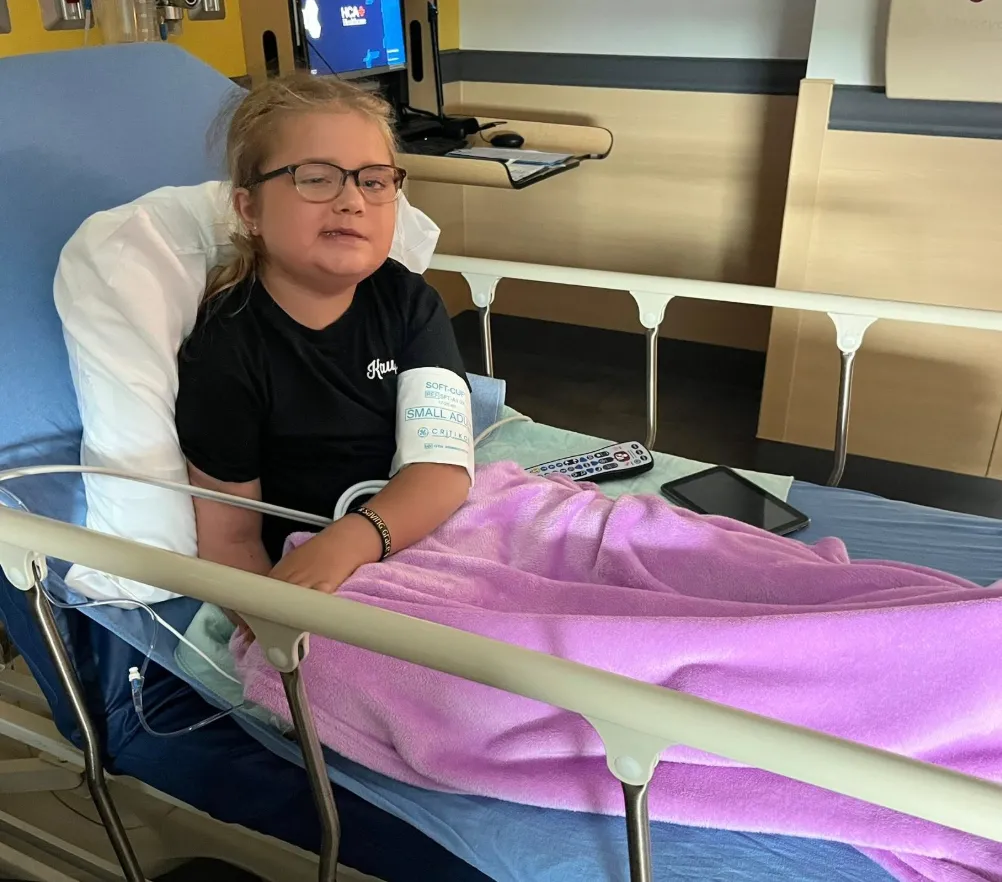
And now, after a nearly 14-month battle with an unforgiving brain cancer, Maddie’s family is facing the reality no parent should ever have to live through: their little warrior has “traded in her sword for angel wings.”
She is gone — at least from this world.
But her story… her light… her spirit… remains.
This is the story of a girl who refused to be defined by cancer.
A girl who declared, over and over again, “DIPG is no big deal.”
A girl whose courage left adults speechless and whose joy—despite pain—left them humbled.
This is Maddie’s story.

A Diagnosis Meant to Break Spirits — But Not Hers
Diffuse Intrinsic Pontine Glioma.
A three-word diagnosis that steals breath, steals futures, steals childhood.
DIPG is one of the most aggressive and lethal pediatric brain cancers in the world — a disease that doctors know how to identify but still cannot cure. A diagnosis that often breaks families and leaves even seasoned physicians at a loss for words.
But somehow… it didn’t break Maddie.
After learning what she was up against, she didn’t cry, hide, or crumble the way most adults would.
Instead, she shrugged and said:
“DIPG is no big deal.”
And on other days:
“DIPG is just fine.”
No fear.
No dread.
No hesitation.
Just Maddie — brave, hilarious, unshakably optimistic.
Her parents and doctors would later say that they often looked at her and wondered:
How can a child carry more courage than an army?
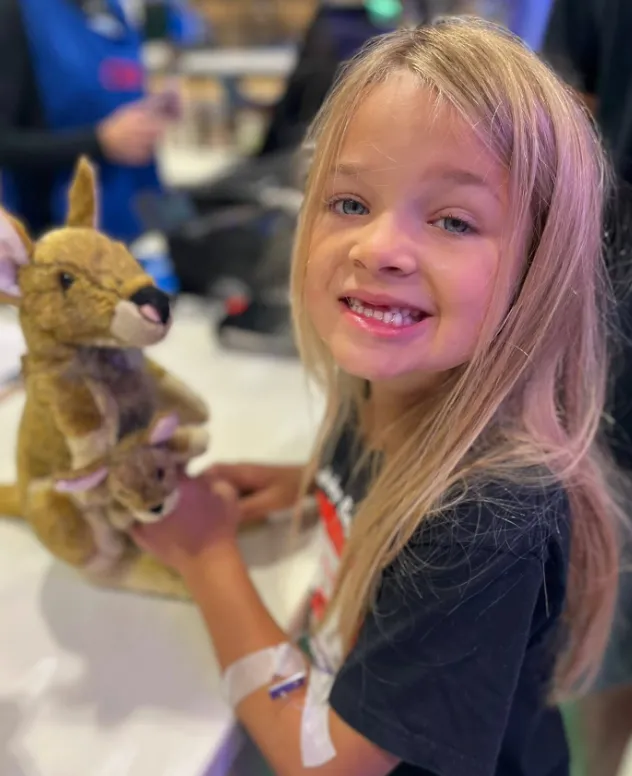
The Laugh Everyone Loved — And No One Will Forget
If you ask the people who knew her what they remember most, they won’t mention her diagnosis first.
They’ll mention her laugh.
Not just any laugh — a laugh that cracked wide open, bright and pure and loud enough to pull joy back into rooms where sadness had settled.
A laugh that made other children giggle until they fell over.
A laugh that made adults smile even through tears.
A laugh so infectious that even strangers felt healed by it.
It is impossible to talk about Maddie without smiling at least once. She was the child who brought glitter into darkness, the one who made ordinary days feel like adventures, the one who had a gift for turning pain into jokes and fear into something small enough to step over.
Her appearance brightened rooms.
Her voice softened hearts.
And her laugh — her glorious laugh — made people believe in hope again.