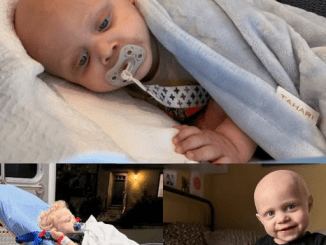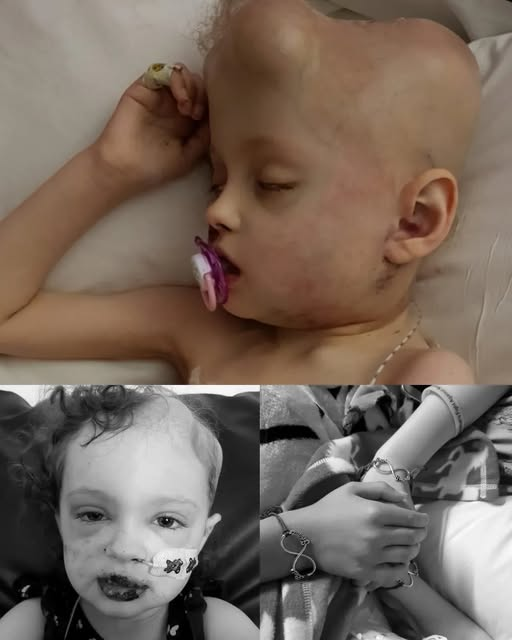

There are names that linger long after they are spoken — names that carry warmth, courage, and the quiet echo of laughter that never fades.
Siobhan Mather is one of those names.
To the world, she was a beautiful little girl with sparkling eyes and a smile that could light up even the darkest hospital room.
To her family, she was everything — their daughter, their fighter, their miracle.
And though she left this world far too soon, her spirit continues to inspire all who hear her story.
On June 1, 2019, at just four years old, Siobhan gained her angel wings after a courageous two-year battle with
Stage 4 Neuroblastoma — a rare and aggressive childhood cancer.
But those who knew her say she never let the illness define her.
Instead, she faced every day with a strength that seemed almost impossible for someone so small.
The Beginning of the Fight
When Siobhan was just two years old, her parents noticed small changes — moments that didn’t seem serious at first.
She was a little more tired than usual, a bit fussier, sometimes losing her appetite.
Doctors thought it was a virus, maybe exhaustion, maybe growing pains.
But as weeks passed, her symptoms worsened.
She began crying at night, pointing to her stomach, saying it hurt.
Her parents knew something wasn’t right.
After countless tests, scans, and sleepless nights, they finally received the diagnosis that shattered their world:
Stage 4 Neuroblastoma.
The cancer had already spread.
It was in her bones, her liver, her lymph nodes — places no parent ever wants to hear about in connection with their child.
At just two years old, Siobhan was thrown into a battle most adults could never imagine.
Her parents described that day as the moment “life split in two.”
There was before cancer — filled with giggles, playgrounds, bedtime stories.
And then there was after — hospitals, chemotherapy, fear, and unbreakable love.
The Girl Who Smiled Through Pain
From the first day of treatment, Siobhan showed everyone what real bravery looked like.
Even when she was hooked up to IV lines, she’d grin at the nurses, wave at other patients, and sing softly to her stuffed animals.
Her favorite songs were nursery rhymes — simple, sweet, and full of hope.
She wore colorful pajamas to her treatments, always insisting on bright colors — pinks, yellows, and purples.
When her hair began to fall out, she didn’t cry.
Instead, she picked out a tiny rainbow headband and said, “It’s okay. Now my head can sparkle more.”