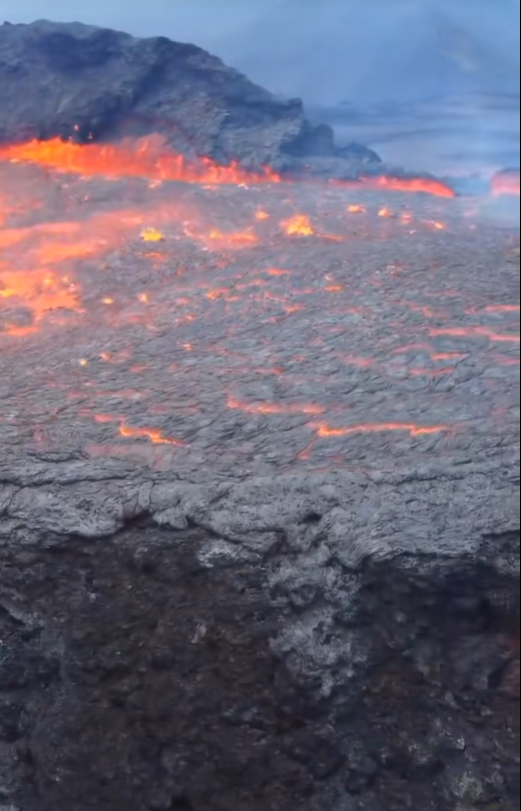
This image captures one of nature’s most awe-inspiring and terrifying spectacles: molten lava slowly advancing across the landscape during a volcanic eruption. The fiery orange glow radiating from beneath the hardened crust reveals the immense heat and power at work. Streams of liquid rock move steadily forward, creating intricate patterns as they cool and solidify on the surface. The upper layer appears rough and cracked — a mosaic of cooling basalt — while beneath it, incandescent magma pulses with a relentless, almost living energy. The sharp contrast between the blackened crust and the bright orange fissures gives the scene a dramatic and otherworldly quality.
Lava flows like this are born deep within the Earth, where extreme heat and pressure melt solid rock into magma. When a volcano erupts, this molten material is forced upward through cracks and vents, spilling across the surface in rivers of fire. Depending on its composition, the lava can flow quickly like a liquid river or move slowly and viscously, consuming everything in its path. The type seen here seems to be a pāhoehoe flow — common in basaltic eruptions — where the surface cools into smooth, rope-like textures while the molten interior continues to move beneath. The glowing veins of orange visible in the image mark areas where the crust has cracked open, releasing heat and revealing the lava’s molten core.
This scene also speaks to the duality of volcanic power — both destructive and creative. On one hand, the heat and flow can obliterate everything: vegetation, homes, even roads, leaving behind a barren wasteland of charred rock. On the other hand, these very same flows are the building blocks of new land. Over centuries, cooled lava weathers into fertile soil rich in minerals, supporting new ecosystems. Islands like Hawaii and Iceland owe their very existence to such eruptions, reminders that destruction often precedes creation in nature’s cycles.
The photograph’s perspective — close enough to see the fine details of the lava but distant enough to avoid the deadly heat — invites both fascination and fear. The air above the flow likely shimmers with rising heat waves, and the acrid scent of sulfur dioxide would fill the atmosphere. Despite the apparent calmness of the advancing lava, the temperature here exceeds 1,000 degrees Celsius (1,832°F), hot enough to incinerate anything organic within seconds. The slow pace of the flow can be deceptive; while it gives people time to evacuate, it is unstoppable once it begins to spread, burying landscapes under layers of new rock.
From a geological perspective, this image is a window into the Earth’s inner workings — a glimpse of the processes that have shaped continents and oceans over billions of years. Volcanic eruptions continually reshape our planet’s surface, reminding humanity of its smallness before nature’s raw power.
Emotionally, the image evokes a sense of reverence. The glowing cracks resemble veins of energy coursing through the Earth’s crust, as if the planet itself were alive and breathing. It is a reminder that beneath the surface of our world lies an immense, restless force — beautiful, dangerous, and eternal. In witnessing this fiery display, one cannot help but feel humbled by the reminder that creation and destruction are inseparable forces in the grand story of Earth.